

2 April 2026·14 min read
CRA Annex I Checklist for Firmware Engineers
Map all 13 CRA Annex I security requirements and 8 vulnerability handling obligations to concrete firmware engineering tasks. Embedded checklist.
Practical EU Cyber Resilience Act guidance for embedded product teams.
Map all 13 CRA Annex I security requirements and 8 vulnerability handling obligations to concrete firmware engineering tasks. Embedded checklist.
CRA Article 14 vulnerability reporting: 24-hour, 72-hour, and 14-day deadlines explained, plus how to set up a minimum viable PSIRT for embedded teams.
Map CRA Annex I requirements to Zephyr's security ecosystem (MCUboot, Mbed TLS, PSA Crypto, MPU) and find the gaps you still need to build.
Map CRA Annex I requirements to FreeRTOS variants—vanilla kernel, AWS FreeRTOS, and vendor SDKs—and find the gaps the kernel doesn't cover.
CRA Annex I secure boot for MCUs in practice: root of trust, code signing, anti-rollback, and choosing a bootloader for your product.
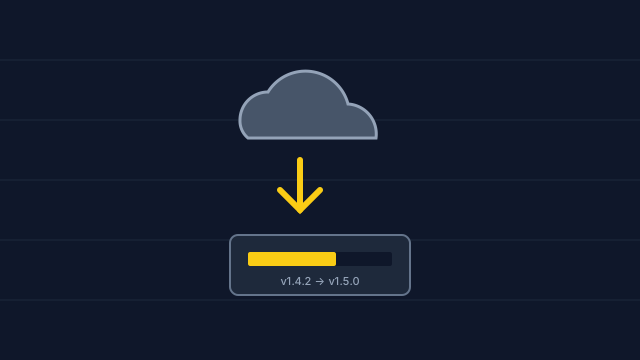
Build a CRA-compliant OTA firmware update pipeline for MCU and embedded Linux products—free, timely, and meeting Annex I lifecycle requirements.
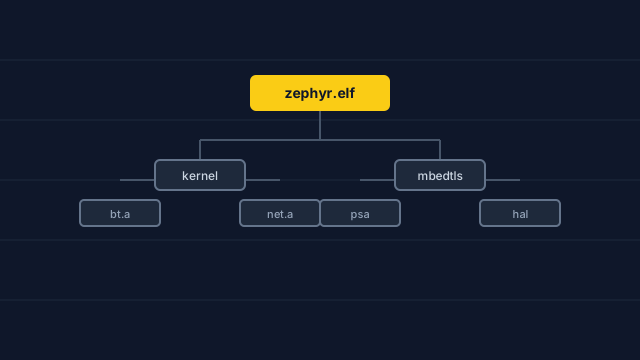
Zephyr's west spdx misses CPE/PURL identifiers and binary blobs needed for CRA vulnerability scanning. Full SBOM enrichment tutorial.
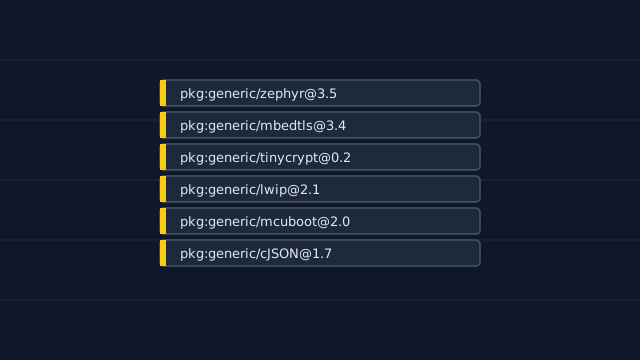
Generate a CRA-compliant SBOM for embedded firmware: handle binary blobs, vendor SDKs, and RTOS forks that break standard SBOM tools.
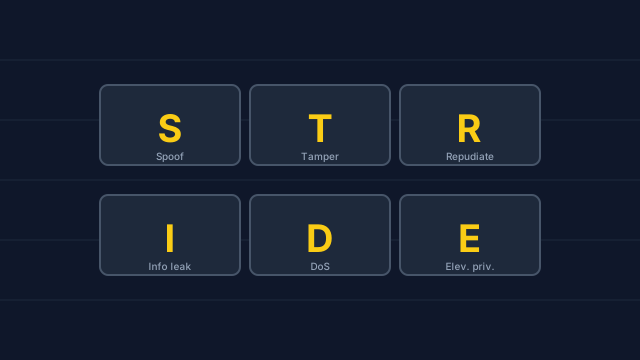
Threat modeling for embedded products under CRA Annex VII: handling physical attacks, JTAG access, and constrained environments with STRIDE.

CRA Default, Class I, and Class II tiers explained: which conformity assessment path you take and what it costs in time and money.
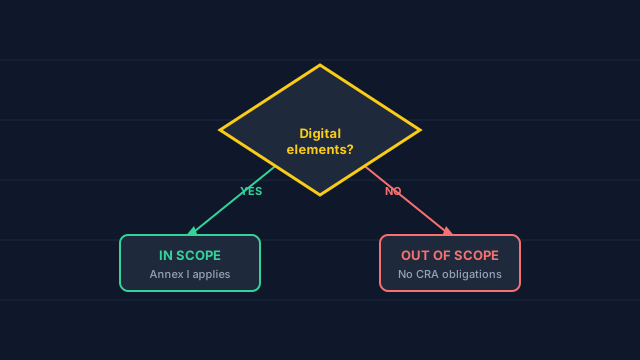
Does the EU Cyber Resilience Act apply to your embedded product? Decision framework for digital elements, offline devices, and OEM components.